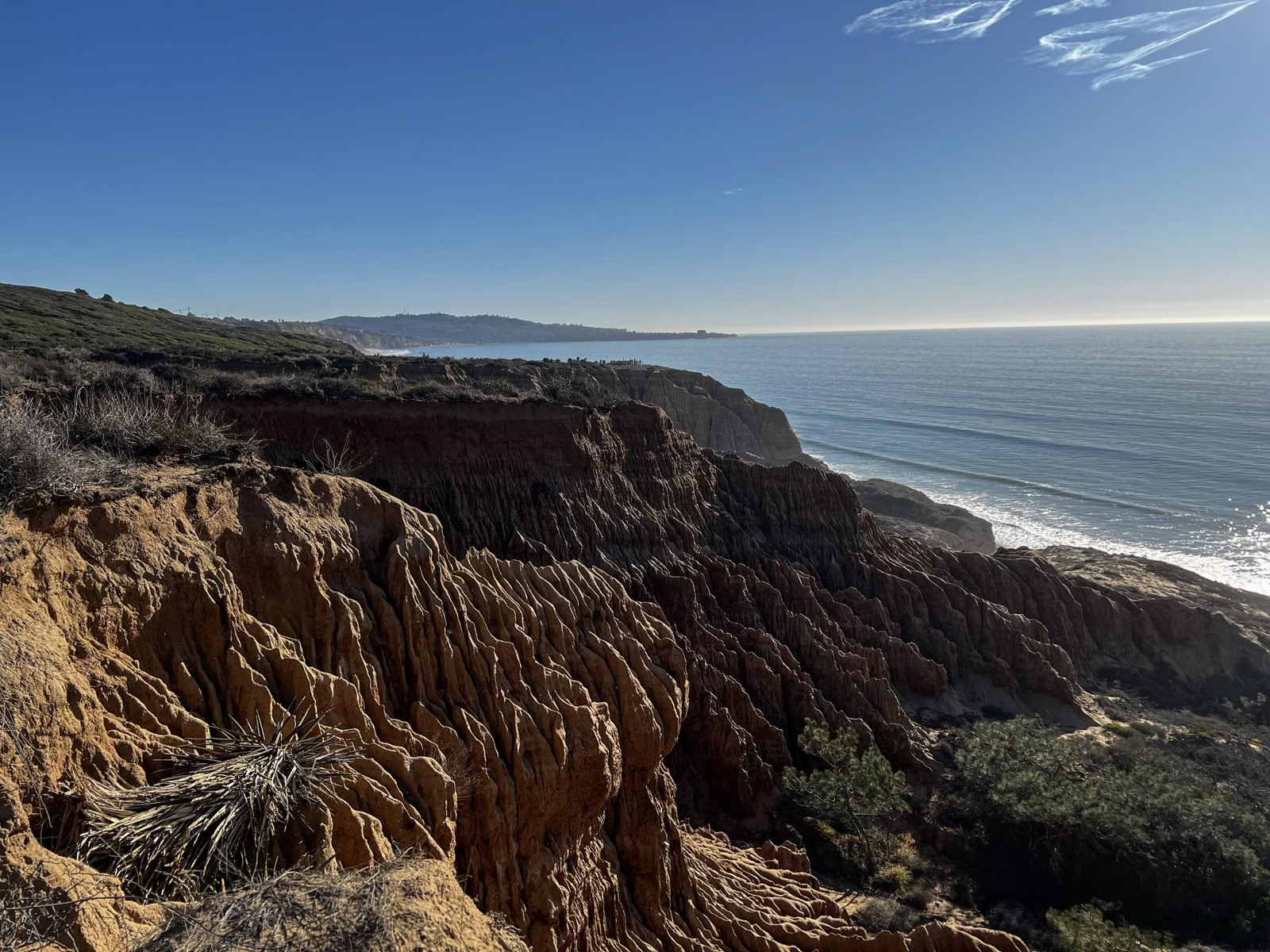
Torrey Pines State Natural Reserve —
Your Complete Guide
Sandstone bluffs, ocean overlooks and the rarest pine in the country, on the coast between La Jolla and Del Mar.
What is Torrey Pines State Natural Reserve?
Torrey Pines State Natural Reserve is a protected coastal wilderness of about 2,000 acres between La Jolla and Del Mar in San Diego, home of the Torrey pine, the nation's rarest pine. California State Parks runs it. Short trails cross sandstone bluffs and ravines to ocean overlooks and down to the beach. The reserve is closed to all visitors from September 22, 2026 until about March 1, 2027 for a construction project; Torrey Pines State Beach below it stays open.
It is a state natural reserve, not a regular park, so the rules are strict: no dogs, no food above the beach, no drones. Its protection dates to 1899 (history), and the pueblo-style Lodge sits at the top of the park road. The classic outing is the Beach Trail down to Flat Rock and a low-tide walk back along the sand.
During the closure, State Parks lists the Reserve Extension trails in Del Mar as open, and the 4½-mile state beach with its North and South Beach lots is open as usual. Full details: what's closed and what's open.
Torrey Pines State Natural Reserve at a Glance
What to Do at Torrey Pines
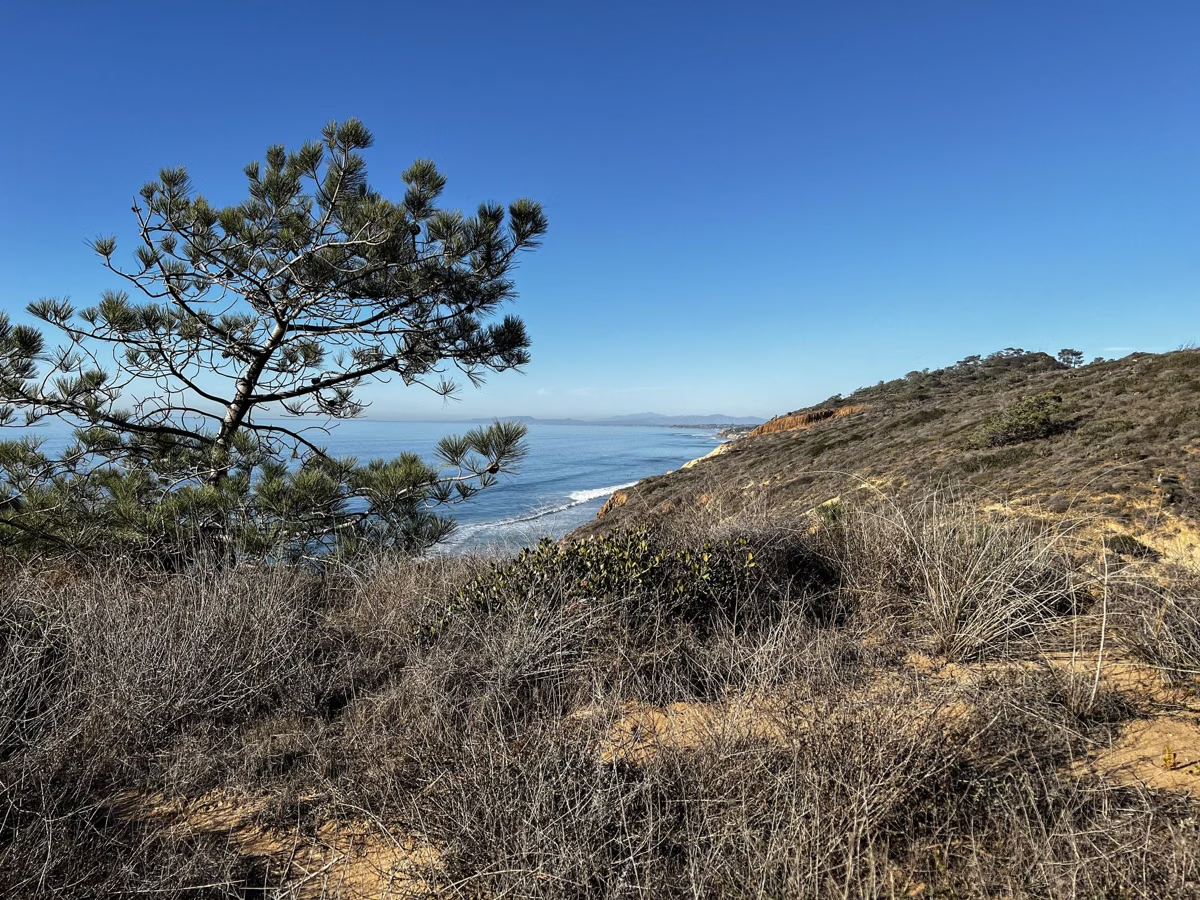
Bluff-top hikes, a long sandy beach, gliders over the cliffs and a tree that grows almost nowhere else.

Hiking
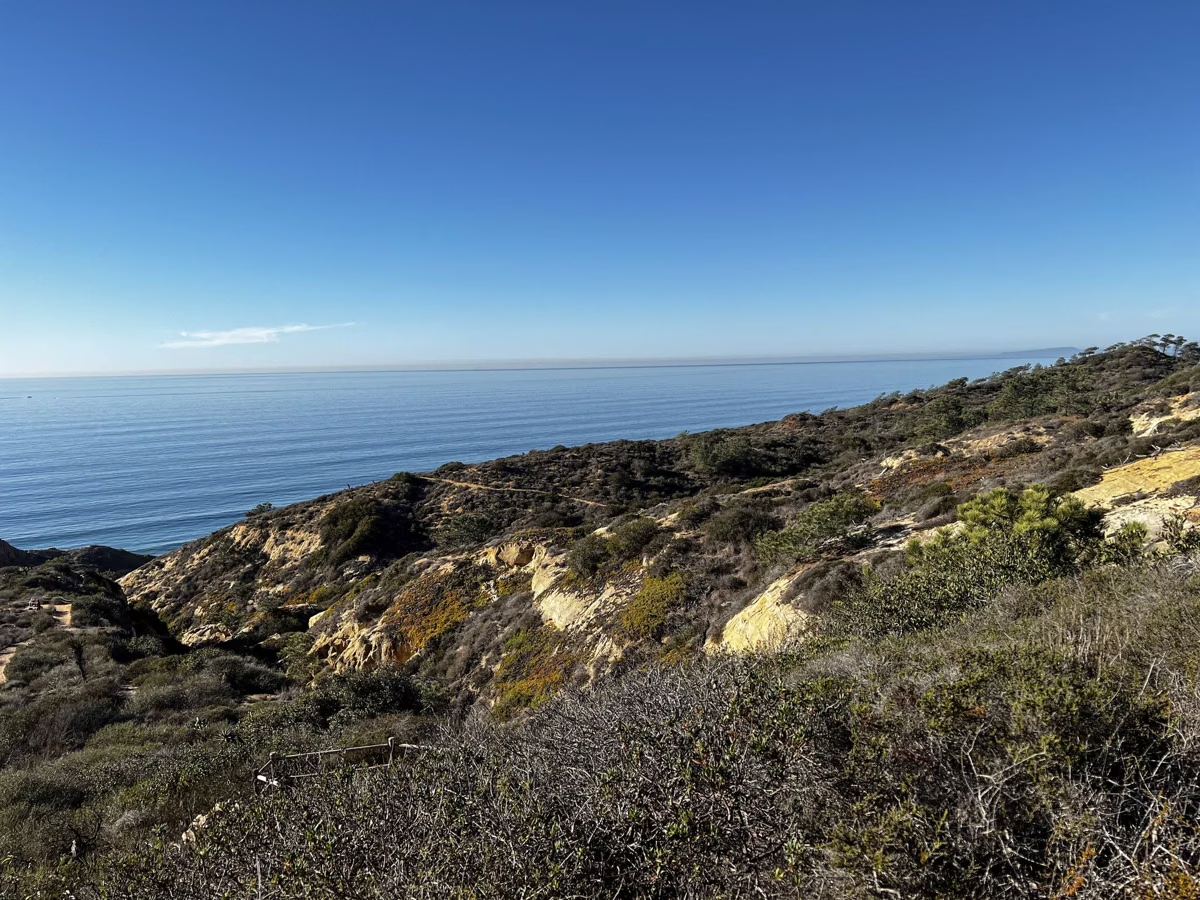
Short trails along the bluffs, from the easy Guy Fleming loop to the Beach Trail down to Flat Rock.
Best Hikes →
Torrey Pines State Beach
4½ miles of sand from Del Mar to the cliffs. Swimming, surfing and low-tide walks. Open during the closure.
Beach Guide →
Black's Beach
Two miles of sand below 300-foot cliffs, reached safely only along the beach at low tide.
Access & Safety →
Torrey Pines Gliderport
A City of San Diego park on the cliffs, used for soaring since 1930. Tandem paragliding and hang gliding.
Fly or Watch →

Reserve Extension
Four short trails in Del Mar with lagoon views and free street parking. Open during the closure.
Open Trails →Trails at Torrey Pines
Short trails; the longest, Broken Hill, is about 1.4 miles one way. Closed until about March 1, 2027.
The most level trail, with two ocean overlooks and the most wildflowers.
Drops about 300 feet to stairs at Flat Rock on the beach.
Sandstone gorge, badlands and the Yucca Point Overlook.
The longest trail, through chaparral to the beach; South Fork accessible to the overlook.
How to Get to Torrey Pines
Two State Parks lots on the coast road, and no parking on the shoulders.
Directions
From I-5, Carmel Valley Road west to the coast, or Genesee Avenue to North Torrey Pines Road. Directions.
Before You Go
No food above the beach, no dogs, and check the tide before walking under the cliffs. What to bring.
Park Office
12600 N. Torrey Pines Road, San Diego, CA 92037. Phone (858) 755-2063.
Nearby
South of the reserve, the Torrey Pines Gliderport sits on the cliff top above Black's Beach. North, the state beach runs past Los Peñasquitos Lagoon to Del Mar, and the Reserve Extension lies on the far side of the lagoon.
Frequently Asked Questions
Is Torrey Pines State Natural Reserve open?
No. It is closed to all visitors from September 22, 2026 until about March 1, 2027 for a State Parks utility project. Torrey Pines State Beach, its two lots and the Extension trails stay open.
How much does it cost to park at Torrey Pines?
$15 to $25 per vehicle at the South Beach lot and $10 to $25 at North Beach, depending on demand.
What are the hours at Torrey Pines?
Gates open at 7:15 a.m. and close at sunset.
Are dogs allowed at Torrey Pines?
No. Dogs are banned in the reserve and on the state beach, even inside vehicles. Working service dogs are allowed.
What is the best hike at Torrey Pines?
The Beach Trail to Flat Rock with a low-tide walk back on the beach, or the easy 2/3-mile Guy Fleming loop.
Can you bring food to Torrey Pines?
Only to the beach and parking lots. Above the beach, only water is allowed.
Is Torrey Pines a national park?
No. It is a California state natural reserve, one of only 14 in the state park system.